 Western Wilson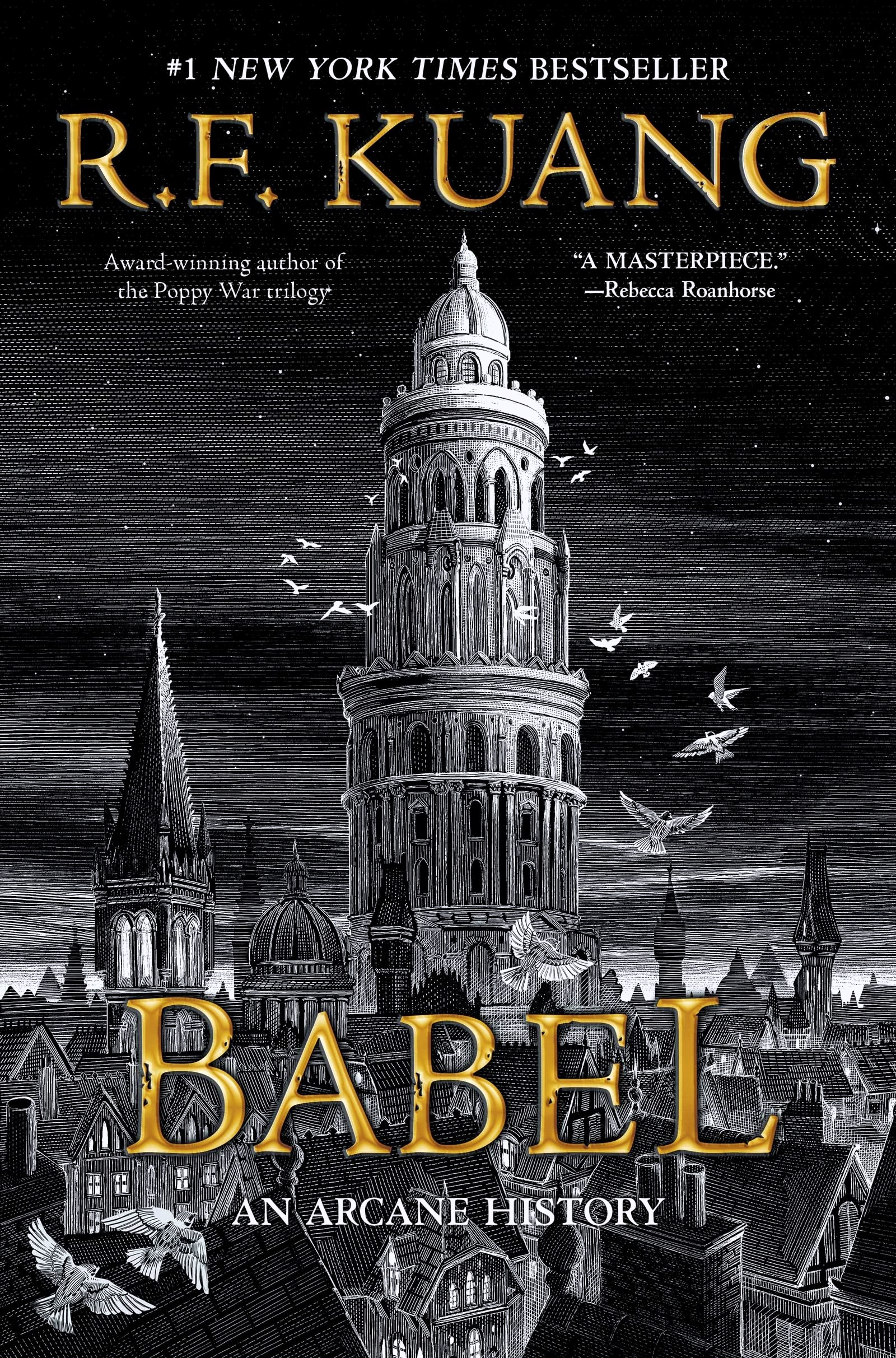
A historical fantasy set in 1828 Oxford, following Robin Swift—an orphaned Chinese boy recruited to study at Babel, the Royal Institute of Translation. Silver-working magic fuels the British Empire, and Robin must choose between serving the institution or joining the resistance against colonial violence.
Notes on Babel
This book begins and ends with sadness. It has many ups and downs which helped me feel really invested in the students journey.
The author moves through the story really quick. It’s great to read because it feels like there is no dawdling on useless parts of text or superflous detail. It all moves the plot or develops a character. Such a good author.
It reminds me of Derek Sivers and his ethos about reducing and refining the texts he writes into their most condensed form. It makes his writing great to read too, because it shifts quickly and captures big ideas in a small amount of text.
I drew parallels with the plot of this book and the age of AI we are currently living through. Yes it’s written in a time near the industrial revolution but the silverworking automations are more like magic (which in some ways is what AI can feel like).
The book explores privileged/secret knowledge learnt by a select few scholars (in real life, this would be tech workers), and the benefits of these outputs given to that small class. With the age of AI, we are being sold a pipe dream where complex technical knowledge is no longer limited to a select few who studied it, and now anyone can pull up a chatbot to create something.
There are substantial job losses as a result of silver working by the scholars and researchers at Oxford. Loads of people losing work because of the efficiency gains that silver gives machines. It sounds similar to what’s happening now in the AI revolution.
The book forces us to acknowledge how our optimisations affect people without that knowledge, it’s something that the scholars (or tech workers) tend to ignore. Confronting the loss of jobs and sometimes even loss of lives due to new technology (self driving cars, unsafe automated machinery, and working conditions or environmental impact). It’s a bleak look at a different era where some of these same problems seem to be reoccurring.
There are huge colonialist undertones throughout the book and in the secret (or perhaps no longer secret) inner workings of the translation society in bringing the world under their leadership. They achieve this not through war, but through knowledge and intentional mistranslation of treaties. Tbh they might have been unintentional mistranslations, but at the time it was the best translation they could give with their scoped in points of view.
This idea is relevant to the Treaty of Waitangi and central to some of the arguments presented in NZ politics. They argue that Māori understood and signed the Māori document, assuming that same intent was on the English version. There are arguments that this was intentional mistranslation in favor of the crown.
Many characters in the story come from broken homes, grew up as slaves, or lost their families to sickness. The kids that showed intelligence were plucked by the translation society, and indoctrinated into an English upbringing to take advantage of their natural language heritage. We know how much our environment can shape our opinions. Imagine growing up as a child taken from your homeland and raised inside the empire of the English? Imagine how much that upbringing might shape your perspective of the world. Western ideas and Western thoughts.
On that, AI as built today, thinks in this same Western thought. The data is more heavily weighted towards what is on the internet, and so minority languages that arent as common in the public domain are weighted out. Not an easy problem to solve, and probably not one many people will want to solve because of the percieved “pay off”. It’ll take a strong and well-driven community to drive it, or a banding together of indigenous folks in similar predicaments. The latter is more realistic imo.
At the end of this book, I can’t help but feel sad. Their dependence on silver working was the downfall of the empire. There are lessons here warning us about over-dependence on AI.
Professor Lovell in the book uses the argument that the scholars’ hard work is justification enough for them to profit from it. He believes this information is out there for anyone to learn, they could’ve taken advantage of the system and learnt and succeeded like him. But what that argument misses is that the environment in which the professor grew up in is vastly different. The tutors, the private lessons, access to resources. Even something as simple as time to study.
It’s sad we don’t hear about whether the empire recovered from the tragedy of the tower collapse. But I assume this is intentional as it allows us the freedom to think about what might have happened.
Quotes
Chapter 2
‘But in latin, malum means “bad” and mālum,’ he wrote the words out for Robin, emphasizing the macron with force, ‘means “apple”’. Interesting comparison to the macron in Maori. The main example I remember has to do with shit I think.
Learnt about the word “erudite”, which means to have or show great knowledge.
He learned what the Corns Laws we’re and what they had to do with a Frenchman named Napoleon. He learned who the Catholics and Protestants were, and how the (he thought at least) small doctrinal differences between the two were apparently a matter of great and bloody importance.
New words in English were a game to him, for in understanding the word he always came to understand something about English history or culture itself. He delighted when common words were, unexpectedly, formed from other words he knew. Hussy was a compound word of house and wife. Holiday was a compound of holy and day. Bedlam came, implausibly, from Bethlehem. Goodbye was, incredibly, a shortened version of God be with you.
Chapter 3
So what does that tell you Birdie? If they’re going to tell stories about you, use it to your advantage. The English are never going to think I’m posh, but if I fit into their fantasy, then they’ll at least think I’m royalty.’ This was Remy assuming the identity of a royal and behaving in a way that took control of the narrative of how he was perceived. Within the realms of what the English though practicable.
Chapter 6
He felt loose, vulnerable. Too passionate for what should have been and intellectual discussion. ‘We take their languages, their ways of seeing and describing the world. We ought to give them something in return.’ ‘But language,’ said Professor Lovell, ‘is not like a commercial good, like tea or silks, to be bought and paid for. Language is an infinite resource. And if we learn it, if we use it - who are we stealing from?’
Chapter 9
‘Then the expense is entirely invented?’ Robin asked. This came about more sharply than he’d intended. But her was thinking, then, of the choleric plague that had swept through London; of how Mrs Piper explained the poor simply could not be helped, for silver-work was so terribly costly. ‘Oh, yes.’ Professor Playfair seemed to find this all very funny. ‘We hold the secrets, and we can set whatever terms we like. That’s the beauty of being cleverer than everyone else…’ This makes me think about IT or any other skill based or learned field. We charge a premium not for the difficulty of the task at hand. But for the years of experience spent learning to make the task fast. Some element of time efficiency and not having to burden ourselves with that knowledge too. Even if it might be easy to learn, shrouding it in difficulty makes paying for it easier. I want to try my best to learn throughout my whole life. Always tinker and try things out myself. We have the internet in our pockets.
Chapter 10
‘But China has no reciprocal appetite for British goods. When the Qianglong Emperor received a display of British manufactured items from Lord Macartney, do you know what his response was? Strange and costly objects do not interest me. The Chinese don’t need anything we’re selling; they can produce everything they want on their own. So silver keeps flowing to China, and there’s nothing the British can do about it because they can’t alter supply and demand. One day it won’t matter how much translation talent we have, because silver reserves will simply not exist to put it to use. The British Empire will crumble as a consequence of its own greed. Meanwhile, silver will accrue in new centres of power - places that have heretofore had their resources stolen and exploited…’ This conversation was between Robin and his older brother.
Chapter 12
The full impact of so-called silver industrial revolution, a term coined by Peter Gaskell just six years before, was just beginning to be felt across the country. Silver-powered machines of the kind William Blake dubbed ‘dark Satanic Mills’ were rapidly replacing artisinal labour, but rather than bringing prosperity to all, they had instead created an economic recession, had caused a widening gap between rich and poor that would soon become the stuff of novels by Disraeli and Dickens. Rural agriculture was in decline; men, woman, and children moved en masse to urban centres to work in factories, where they laboured unimaginably long hours and lost limbs and lives in frightful accidents. Our civilization has gone through this industrial revolution already. But it begs the question, what would happen if the knowledge work was replaced by agentic systems. Would people in the know have working knowledge to profit from it? Will people retreat from urban centres into the country sides, in an effort to claim back that which makes us human?
Chapter 32 Todo: add characters.
Insane was not enough to cover it, Robin thought. English was insufficient to describe all this. His mind wandered to old Chinese texts, the idioms they employed about dynastic collapse and change. (Add chars here); tiānfalāndìfù. The heavens fell, and the earth collapsed in on itself.
Chapter 33
How did one make peace with one’s own death? According to the accounts of Crito, the Phaedo, and the Apology, Socrates went to his death without distress, with such preternatural calm that he refused multiple entreaties to escape.
I copied this quote while on a plane leaving Athens. This was after walking past the prison of Socrates and the university building where he taught.